


December 16, 2025 By Admin
Follow all the latest news, bids, and the full list of sold and unsold players from the IPL 2026 Auction at Etihad Arena, Abu Dhabi
IPL 2026 Auction Live Recap: Big Buys, Shock Unsolds, Team Purses & Full Story from Abu Dhabi
The IPL 2026 Auction in Abu Dhabi was full of drama, big money, surprise names, and shocking unsold players.
The event took place at the Etihad Arena in Abu Dhabi on 16 December 2025, starting at 2:30 PM IST. All 10 IPL teams came to the auction to complete their squads for the IPL 2026 season.
This year’s event was a mini-auction, not a mega auction. That means:
- Teams kept most of their old core players.
- They came to the auction mainly to fix weak areas.
- Only the remaining open slots were available for new signings.
Let’s go step by step and understand everything in very easy English.
1. Basic Auction Facts – How Many Players and Slots?
Before the auction started:
- More than 350 players were part of the final auction list (around 359).
- There were 77 total slots available across all 10 teams.
- Out of these 77 slots, 31 were overseas (foreign) slots.
Each IPL team can have:
- A maximum of 25 players in the squad.
- Out of these 25, only 8 can be overseas players.
So, many players came into the auction pool, but only a small number actually got sold. This is why the money went very high for a few players, and many others went unsold.
2. Team Purses Before the Auction – Who Had the Most Money?
Before the first player was called, this was the money left with each team:
| Team | Purse Left (₹ Crore) |
|---|---|
| Kolkata Knight Riders (KKR) | 64.30 |
| Chennai Super Kings (CSK) | 43.40 |
| Sunrisers Hyderabad (SRH) | 25.50 |
| Lucknow Super Giants (LSG) | 22.95 |
| Delhi Capitals (DC) | 21.80 |
| Royal Challengers Bengaluru (RCB) | 16.40 |
| Rajasthan Royals (RR) | 16.05 |
| Gujarat Titans (GT) | 12.90 |
| Punjab Kings (PBKS) | 11.50 |
| Mumbai Indians (MI) | 2.75 |
So:
- KKR had the highest purse and many empty slots.
- CSK had the second-highest purse.
- MI had the lowest purse, so they had to be very careful while bidding.
This money difference explains why some teams were very aggressive (like KKR and CSK), and some teams stayed quiet or waited for bargains.
3. Biggest Auction Story: Cameron Green Becomes Costliest Overseas Player
The main headline of the IPL 2026 Auction was:
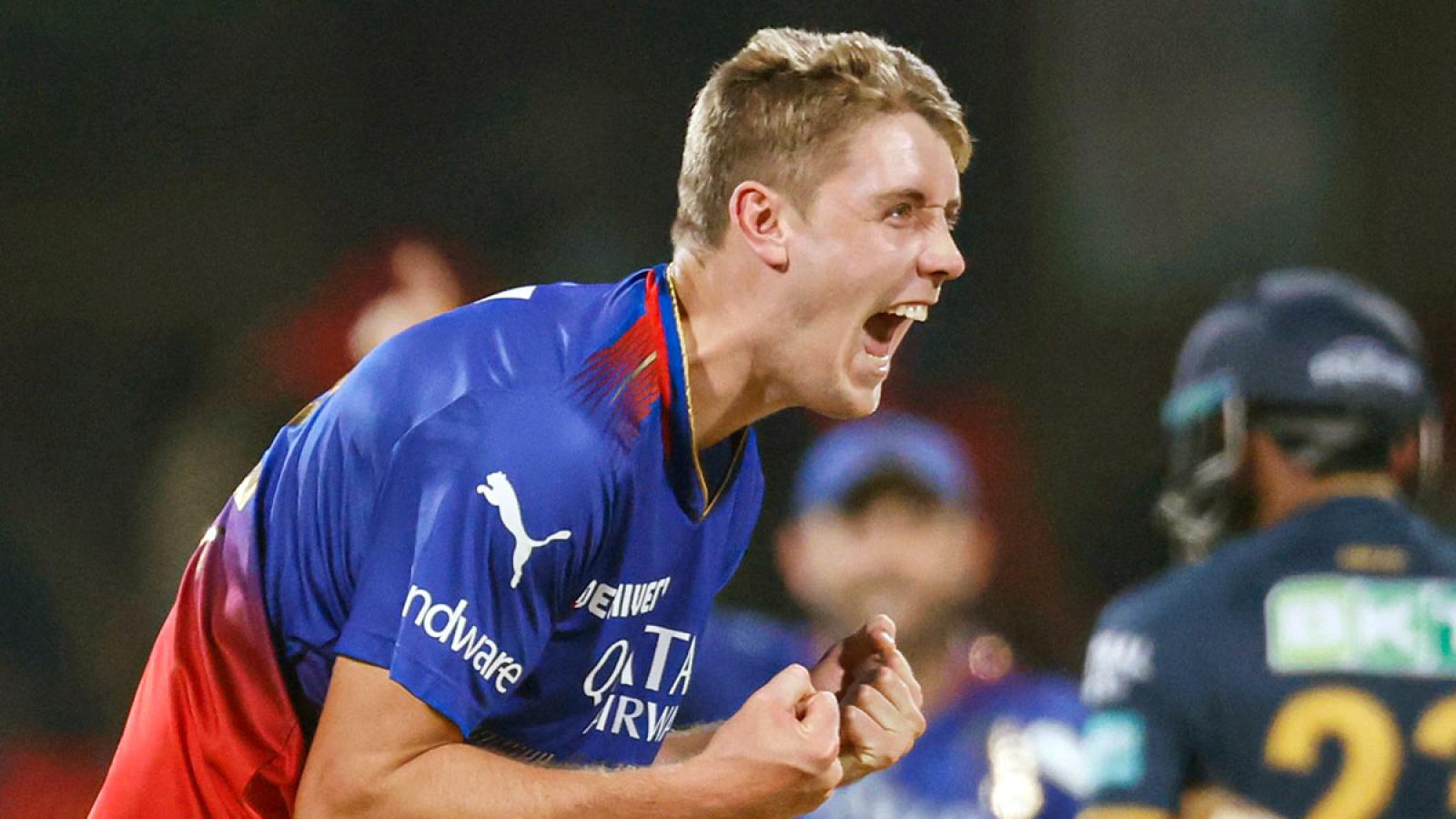
Cameron Green to KKR for ₹25.20 crore
- Cameron Green is an Australian all-rounder.
- His base price was ₹2 crore.
- There was a huge bidding war between KKR and CSK.
- Finally, KKR won the battle at ₹25.20 crore.
This made Green the most expensive overseas player in IPL auction history.
For KKR, this was a big move because:
- They get a hard-hitting batter and a fast-bowling all-rounder in one player.
- It clearly shows KKR are building the team around a powerful multi-skill foreign star.
4. Another Big KKR Move: Matheesha Pathirana for ₹18 Crore
KKR did not stop at Cameron Green. They went big again for Sri Lankan fast bowler Matheesha Pathirana.
- Pathirana’s base price was ₹2 crore.
- Many teams showed interest at first.
- The bidding went up and up and finally reached ₹18 crore.
- KKR bought him for ₹18 crore, making him one of the most expensive overseas bowlers in IPL auction history.
So KKR’s two huge signings were:
- Cameron Green – ₹25.20 crore
- Matheesha Pathirana – ₹18 crore
KKR used their big purse to grab two high-impact players – one all-rounder and one specialist fast bowler.
5. CSK Shock Everyone: Two Uncapped Indians for ₹14.2 Crore Each
While KKR were buying big overseas stars, Chennai Super Kings (CSK) stole the show with two uncapped Indian players.
5.1 Prashant Veer – “Jadeja 2.0” for CSK
- CSK bought Prashant Veer, a spin-bowling all-rounder, for ₹14.2 crore.
- He has not played for India yet, so he is an uncapped player.
- Some reports compare him to “Jadeja 2.0” because he can bowl spin and also bat usefully.
5.2 Kartik Sharma – Young Batter/All-rounder for the Same Price
- CSK then bought Kartik Sharma, another young talent, also for ₹14.2 crore.
These two deals made Prashant Veer and Kartik Sharma the joint-most expensive uncapped players in IPL auction history.
It also shows that CSK are ready to invest in young Indian talent instead of only chasing big overseas names.
Together, these two uncapped signings cost CSK ₹28.4 crore, which is more than KKR spent on Green alone.
6. Ravi Bishnoi to Rajasthan Royals for ₹7.2 Crore
Another big story was young Indian leg-spinner Ravi Bishnoi.
- His base price was ₹2 crore.
- CSK and RR started the bidding; SRH also joined later.
- After a tough battle, Rajasthan Royals (RR) bought him for ₹7.2 crore.
Why is this important?
- Bishnoi already has strong IPL and T20I experience as a leg-spinner.
- RR had released some of their earlier spin options.
- Now Bishnoi will be a key part of RR’s spin attack.
7. Venkatesh Iyer to RCB for ₹7 Crore
Another big Indian name in this mini-auction was Venkatesh Iyer.
- Earlier, he was with KKR and had a very high salary in a past mega auction.
- This time, he was released and came back into the auction pool.
At the 2026 auction:
- His base price was ₹2 crore.
- Several teams showed interest: LSG, GT, KKR and RCB.
- The bidding crossed ₹5 crore and finally RCB bought him for ₹7 crore.
For RCB, this is a very smart move because:
- Venkatesh can open the batting or play in the middle order.
- He can also bowl medium pace, which gives balance to the side.
8. Other Important Sold Players
Many more well-known names changed teams. Here are some key deals from various live update lists:
- Quinton de Kock – to Mumbai Indians (MI) for ₹1 crore
- David Miller – to Delhi Capitals (DC) for ₹2 crore
- Ben Duckett – to Delhi Capitals (DC) for ₹2 crore
- Finn Allen – to KKR for ₹2 crore
- Jacob Duffy – fast bowler, to RCB at base price
- Wanindu Hasaranga – all-rounder, to LSG for ₹2 crore
There were also many uncapped Indian pacers and batters who got picked in the lower price range, especially during the accelerated rounds, usually between ₹20 lakh and ₹1 crore.
These smaller deals do not always make the headlines, but they are very important for squad depth.
9. Big Shock: Many Famous Players Go Unsold
One of the most surprising parts of the IPL 2026 Auction was the long list of unsold stars.
Some of the big unsold names were:
- Liam Livingstone (base price ₹2 crore)
- Devon Conway (₹2 crore)
- Prithvi Shaw (₹75 lakh)
- Sarfaraz Khan (₹75 lakh)
- Rachin Ravindra (₹2 crore)
- Jonny Bairstow (₹1 crore)
- Deepak Hooda (₹75 lakh)
- KS Bharat (₹75 lakh)
- Overseas wicketkeeper-batters like Rahmanullah Gurbaz and English prospects like Jamie Smith
- Fast bowlers like Matt Henry, Gerald Coetzee and others
From the unsold lists, even mystery spinners like Maheesh Theekshana and Mujeeb Ur Rahman did not attract bids at their base prices.
Why did this happen?
- Many teams had limited purse left after buying a few big names.
- Some players had high base prices, so teams did not want to risk it.
- Teams were trying to fill specific roles, not just buy famous names.
10. How the Auction Flow Happened – From First Hammer to Accelerated Round
From live updates, we can see how the auction moved from start to finish.
The auction started with capped batters like Jake Fraser-McGurk, who went unsold. Then we saw players like David Miller (sold to DC), Prithvi Shaw (unsold), Devon Conway (unsold), Cameron Green, Sarfaraz Khan, and so on.
After that, wicketkeepers came up:
- Quinton de Kock was picked by MI.
- Rahmanullah Gurbaz, Jonny Bairstow and KS Bharat went unsold.
Then capped fast bowlers were called – Matt Henry, Akash Deep, Shivam Mavi, Gerald Coetzee and others. Some went unsold; a few like Jacob Duffy did get picked.
After the main sets, the auction moved into the accelerated round, where:
- Teams quickly went through shorter lists of players they still liked.
- Many uncapped Indian bowlers, batters and all-rounders were bought here.
- Many more names again went unsold, as teams had almost no money or no slots left.
11. Team-by-Team Mini Summary (In Simple Words)
This is not a full squad list, but a simple summary of how each team’s auction roughly looked:
KKR – All-In on Stars
- Big signings: Cameron Green (₹25.20 crore) and Matheesha Pathirana (₹18 crore).
- Also signed Finn Allen and a few Indian bowlers and all-rounders.
- Strategy: build around big match-winners and a strong pace attack.
CSK – Trust in Young Indian Talent
- Spent ₹14.2 crore each on uncapped players Prashant Veer and Kartik Sharma.
- Also added some overseas role players like Akeal Hosein (spin support).
- Strategy: long-term focus with young Indian core plus experienced foreign help.
RCB – All-Round Power and Pace
- Bought Venkatesh Iyer for ₹7 crore.
- Added bowlers like Jacob Duffy and other role players.
- Strategy: strengthen middle order and bowling to support a strong top order.
RR – Spin and Young Bowlers
- Big signing: Ravi Bishnoi for ₹7.2 crore.
- Picked several uncapped fast bowlers and role players.
- Strategy: refresh bowling attack with a top Indian spinner and cheap Indian pacers.
LSG – All-Round Balance
- Bought Wanindu Hasaranga for ₹2 crore.
- Added young fast bowler Naman Tiwari and other domestic players.
- Strategy: improve lower-middle order and spin options.
DC – Solid Middle Order
- Picked David Miller and Ben Duckett for ₹2 crore each.
- Kept a strong young core from earlier years.
- Strategy: add reliable, experienced batters to support the core.
MI – Low Purse, Smart Moves
- Had only ₹2.75 crore to spend.
- Brought back Quinton de Kock for ₹1 crore.
- Strategy: rely on existing core and make one or two clever additions.
SRH, GT, PBKS
- These teams made medium-range signings and focused on specific needs.
- They did not have huge headline purchases like KKR or CSK.
- Strategy: quietly complete squads with role-based picks.
12. Where and How Fans Watched the Auction
For fans, the IPL 2026 Auction live streaming and telecast details were:
- TV Telecast: Sony Sports Network (India)
- Live Streaming: JioHotstar app and website
- Start Time: 2:30 PM IST
Many websites and apps also ran text live blogs with ball-by-ball style updates of every bid and every player.
13. What This Auction Tells Us About IPL 2026
From all the live updates and final lists, we can see some clear trends:
-
Uncapped Indians are hot property
CSK spending over ₹28 crore on two uncapped players shows how much value teams see in local talent. -
Overseas stars must fit clear roles
Big foreign names went unsold if they did not fit a specific role the teams wanted. -
Bowling is still king
KKR paid huge for Pathirana; RR fought hard for Bishnoi; LSG picked Hasaranga. Teams know strong bowling wins T20 games. -
Money is focused, not spread
Instead of many medium-price players, teams chose to build around a few very expensive core players plus cheap role players.
14. Simple Summary in One Paragraph
The IPL 2026 Auction at Etihad Arena, Abu Dhabi was a high-drama mini-auction where around 359 players fought for 77 spots. KKR used their massive purse to sign Cameron Green (₹25.20 crore) and Matheesha Pathirana (₹18 crore), while CSK shocked everyone by spending ₹14.2 crore each on uncapped youngsters Prashant Veer and Kartik Sharma. Ravi Bishnoi joined RR for ₹7.2 crore, Venkatesh Iyer went to RCB for ₹7 crore, and players like David Miller, Quinton de Kock and Wanindu Hasaranga found new homes at lower prices. At the same time, famous names such as Liam Livingstone, Devon Conway, Prithvi Shaw, Sarfaraz Khan, Rachin Ravindra and Jonny Bairstow went unsold, showing that teams are now very role-focused and money-conscious in the IPL 2026 mini-auction.