


June 09, 2026 By Admin
Learn what A+, A, B, and C player categories mean, how to identify each type, and why classifying players helps build stronger, high-performing teams.
If you've ever sat through a cricket auction and wondered why one player fetches ten times more than another — or why your team always seems to lose momentum mid-season — the answer often comes down to one thing: how well you understand player categories.
A+, A, B, and C classifications are not just labels. They are a strategic framework that shapes how auctions are run, how teams are built, and ultimately, how tournaments are won.
Why Player Categories Matter in Cricket Auctions
Organising a cricket auction without a clear player classification system is like hosting a bidding war without price anchors — chaotic, unfair, and ultimately unsatisfying for everyone involved.
When players are sorted into A+, A, B, and C categories, organizers set the bidding context, teams understand what they are competing for, and viewers experience a structured, exciting event. Categories define expected performance levels, guide base price setting, and prevent budget-blowing surprises.
A+ Players — The Match-Winners
The A+ category represents the elite tier — players who can single-handedly change the outcome of a match. These are the names everyone in the auction room is waiting for. Whether it is a batter who consistently scores above 150 strike rate, a fast bowler who routinely takes 4+ wickets, or an all-rounder who contributes meaningfully with both bat and ball, A+ players are generational talents in their local cricket ecosystem.
Characteristics of A+ Players
- Consistent match-winning performances across multiple seasons
- Elite statistics: SR above 150 (T20), economy below 7, strike rate above 20
- High demand — every team bids aggressively for them
- Can carry an average team into the finals alone
- Command the highest base prices and final bid values
- Often dual-role or all-format players
A Players — The Reliable Performers
A Players sit just below the elite threshold but are arguably the most important category for building a balanced team. These are experienced, consistent performers who deliver in most conditions without the wild unpredictability that sometimes comes with A+ superstars.
A smart team manager often builds their squad around 2–3 A players rather than staking everything on a single A+ pick. These players provide stability, depth, and the kind of match-to-match consistency that wins tournaments rather than just individual games.
Characteristics of A Players
- Consistent performers — rarely a bad game, rarely match-winning alone
- Strong statistics with occasional standout performances
- Experienced in pressure situations
- Usually have specialist skills (opening batter, death-over bowler, etc.)
- Attract strong competition during auctions but within reasonable budgets
- The backbone of top-3 finishing teams
B Players — The Solid Contributors
B players are the workhorses of any squad. They may not fill highlight reels, but they are the players who take the middle-over wickets, score the steady 30s that keep your team in a game, and field brilliantly when it matters. Without a strong B-tier core, even a team with two A+ stars will fall apart.
From an auction strategy perspective, B players often represent the best value-for-money acquisitions. Teams that understand this tend to outperform those that blow their budget chasing A+ glory.
Characteristics of B Players
- Dependable, role-fulfilling performances
- Reasonable statistics — above average but not elite
- Often specialists: a utility batter, a single-format bowler, a reliable fielder
- Available at mid-range prices — often bargain buys
- 3–5 B players form the competitive core of a well-built team
C Players — The Supporting Cast
C Players are often emerging talent, inexperienced players, or those with very specific limited skills. They fill out a roster, providing squad depth for when injuries or unavailability strike. While they may not be match-winners, they represent the future — many current A+ stars once entered their first auction as C players.
For organizers, correctly categorising C players prevents them from being undervalued (which is unfair) or overpriced (which wastes team budgets). Giving C players a fair base price and proper category placement builds credibility for the entire auction.
Characteristics of C Players
- Limited match experience or inconsistent performance history
- Often young or new to the tournament circuit
- Specific skills — maybe a good fielder or net bowler
- Lowest base prices, highest value-risk ratio
- Can surprise — occasionally become breakout stars mid-season
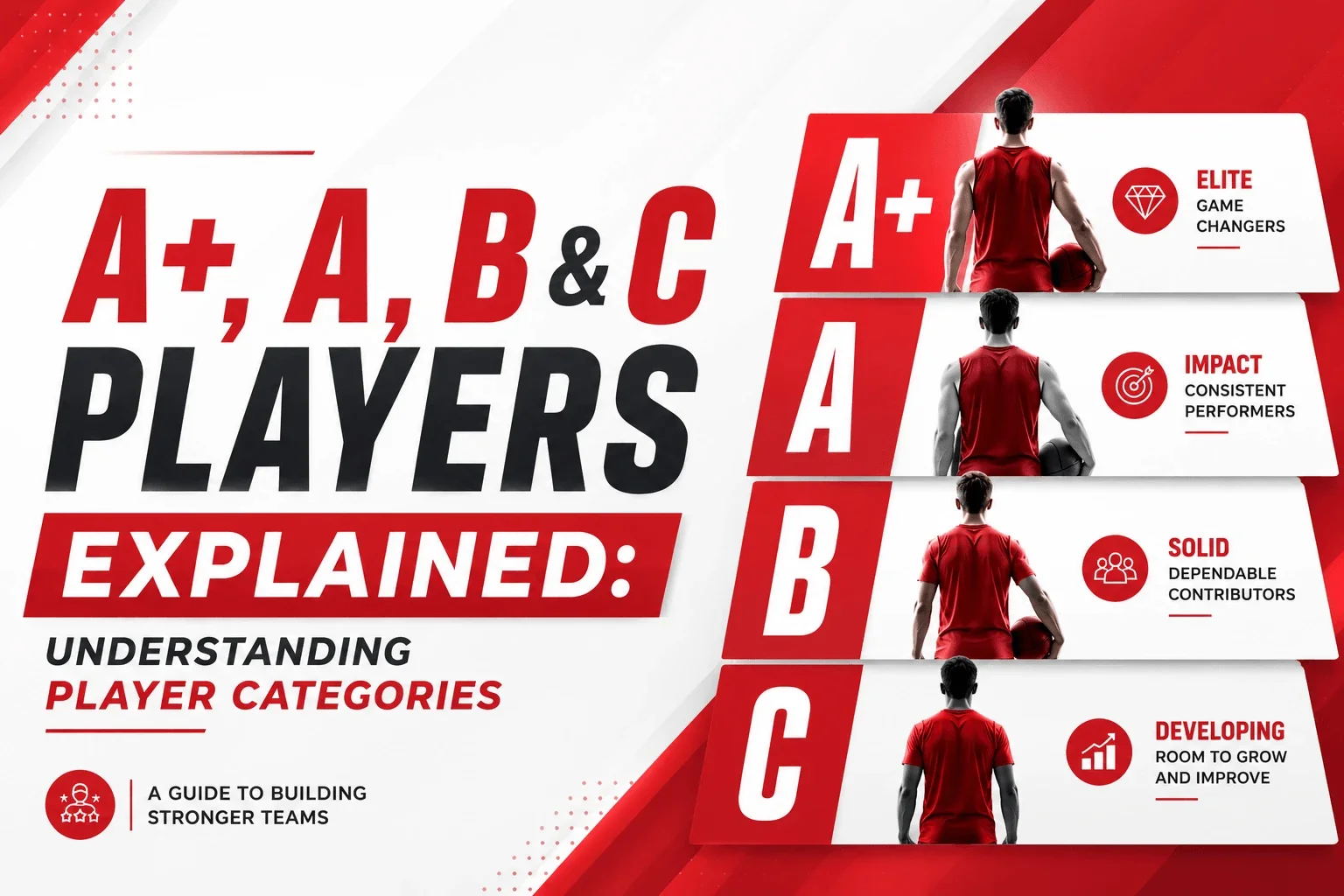
Elite Match-Winner
Single-handedly changes match outcomes. Highest price, maximum impact, extreme bidding competition.
Reliable Performer
Consistent, experienced, rarely disappoints. The tournament backbone. Best long-term squad investment.
Solid Contributor
Fulfils roles reliably. Great budget value. 3–5 B players build an unbeatable competitive core.
Supporting Cast
Emerging talent or specialist with limited experience. Low risk, potential high reward if they break out.
Side-by-Side Category Comparison
| Tier | Performance | Consistency | Auction Demand | Price Range | Team Role |
|---|---|---|---|---|---|
| A+ | Match-Winning | Elite | Extremely High | ₹20K–₹1L+ | Game Changer |
| A | High | Very Good | High | ₹10K–₹25K | Core Player |
| B | Above Average | Steady | Moderate | ₹3K–₹10K | Role Player |
| C | Developing | Inconsistent | Low | ₹500–₹3K | Support / Depth |
*Price ranges indicative for local club-level tournaments. IPL-scale auctions differ significantly.
Using Categories During Auctions
Understanding player categories is one thing. Using that knowledge strategically during an auction is where teams win or lose tournaments before the first ball is bowled.
Budget Allocation by Category
The most successful teams in local cricket auctions typically allocate their budget roughly as follows:
- A+ Players: 25–35% of total budget (1–2 picks maximum)
- A Players: 30–40% of total budget (2–3 picks)
- B Players: 25–35% of total budget (4–6 picks)
- C Players: 5–10% of total budget (squad depth fill)
Bidding Psychology by Tier
Bidding on A+ players tends to become emotional quickly. Teams that set a hard maximum bid before the auction begins and stick to it — even when the room heats up — consistently build better squads than those who "just go one more".
For B and C players, the opposite is true: teams that research these tiers carefully often identify undervalued players who have improved significantly since last season but whose category hasn't been updated, representing genuine auction arbitrage.
Common Mistakes Teams Make with Player Categories
1. Overpaying for a single A+ player
It is tempting to go all-in for the best player in the auction. But spending 50%+ of your budget on one player leaves you scrambling for A, B, and C players with the remaining budget, creating massive quality gaps in your XI.
2. Ignoring B players entirely
B players are the engine room. Teams that see them as filler picks rather than strategic assets consistently underperform despite having recognisable names in their A+ slots.
3. Misclassifying players for politics
In local tournaments especially, organizers sometimes face pressure to categorise popular local players higher than their actual performance warrants. This destroys the credibility of the entire category system and creates bidding disputes.
4. Not reviewing categories year-to-year
A player categorised as C two years ago may now be playing A-level cricket. Stale categories mislead teams and undervalue genuine talent. Categories should be reviewed and updated before every auction.
- A+ players are elite match-winners commanding premium prices — limit to 1–2 picks
- A players provide the consistent core every winning team needs
- B players deliver the best value — never underestimate them
- C players provide depth and future potential at minimal cost
- Set hard bid caps before the auction begins — stick to them
- Review and update categories before every new season
- Budget allocation strategy matters as much as individual player quality
Conclusion
Player categories are not just administrative labels — they are the strategic foundation of every great cricket auction. When A+, A, B, and C players are correctly identified, fairly priced, and strategically targeted, teams build squads that compete throughout an entire tournament rather than burning out after a flashy auction purchase.
Whether you are an organizer designing your next auction system or a team manager preparing your bidding strategy, mastering the player category framework is the single highest-leverage thing you can do before auction day.
Ready to run your next cricket auction with a professional category system built in?
Start Your Auction on CricAuction →